
Let’s be real, your brand is probably a hot mess right now. And that’s okay! Most small business owners are juggling seventeen different hats (CEO, janitor, customer service rep, social media manager, and therapist for difficult clients), so branding often gets the leftover scraps of attention.
But here’s the thing: your brand isn’t just your logo slapped on a business card. It’s everything, how people feel when they see your name, what they expect from your service, and whether they trust you enough to hand over their hard-earned cash.
So grab your favorite caffeinated beverage and let’s dive into the seven biggest branding headaches that are probably keeping you up at 2 AM, wondering why your competitor with the terrible website is somehow getting all the customers.
1. Your Brand Has Multiple Personality Disorder (A.K.A. Inconsistent Branding)
You know that friend who’s completely different every time you see them? One day they’re goth, the next they’re preppy, then suddenly they’re into cottagecore? That’s your brand right now.
Your Instagram looks like it was designed by a teenager obsessed with neon colors, your website screams “professional law firm,” and your business cards look like they were made in 1987. Meanwhile, your email signature is Comic Sans (please tell me it’s not Comic Sans).
The Fix That Actually Works:
Create a brand style guide, and I mean actually use it. This isn’t just some fancy document you create and then ignore. It’s your brand’s bible that includes:
- Your exact colors (with hex codes, not “that pretty blue I saw on Pinterest”)
- Your fonts (primary and backup options)
- Your logo usage rules (seriously, stop stretching it to fit weird spaces)
- Your voice and tone guidelines
Pro tip: Use the same profile picture across all platforms. I can’t tell you how many businesses I’ve seen where I literally couldn’t tell if their Facebook, Instagram, and LinkedIn were even the same company.

2. Your Brand Message Sounds Like Corporate Word Salad
“We leverage synergistic solutions to optimize your customer experience through innovative paradigm shifts.”
What does that even mean? If your grandmother can’t understand what you do in one sentence, your messaging needs CPR.
The worst part? You probably started with clear, simple language, but somewhere along the way, you convinced yourself you needed to sound “more professional.” So you threw in some buzzwords, added unnecessary complexity, and now your messaging sounds like it was written by a robot having an existential crisis.
The Fix That Actually Works:
Write like you’re explaining your business to your neighbor over the fence. Use the “5-year-old test”, if a kindergartner can’t understand what you do, simplify it more.
Instead of “We provide comprehensive digital marketing solutions,” try “We help small businesses get found online.” See the difference? One makes people’s eyes glaze over, the other makes them lean in and ask for more details.
3. Your Visual Identity Looks Like a Garage Sale
Your logo came from Fiverr for $5, your website template was free (and looks it), and your social media graphics are a chaotic mix of whatever you could whip up in Canva during your lunch break.
Look, I get it. Design is expensive, and you’re bootstrapping this thing. But here’s the harsh truth: people judge your business within seconds of seeing your visual identity. A weak visual brand basically screams “I’m new at this and probably won’t be around long.”
The Fix That Actually Works:
You don’t need to hire a fancy agency (yet), but you do need consistency. Pick a color palette, 3-4 colors max, and stick with it everywhere. Choose 2-3 fonts and use them religiously.
If you’re still in the DIY phase, invest in a good template system rather than creating everything from scratch. Your future self will thank you when you’re not recreating the wheel every time you need a social media post.
And please, for the love of all that’s holy, stop using different versions of your logo. Pick one and commit to the relationship.

4. You Have No Brand Strategy (You’re Just Winging It)
Strategy sounds fancy and intimidating, but it’s really just having a plan instead of throwing spaghetti at the wall and hoping something sticks.
Most small businesses approach branding like they’re shopping without a list, grabbing whatever looks good in the moment without considering how it all fits together. You end up with a cart full of random stuff that doesn’t make a cohesive meal.
The Fix That Actually Works:
Start with three simple questions:
- What problem do you solve?
- Who has that problem?
- Why should they choose you over everyone else?
Write these answers down. Post them somewhere you’ll see them daily. Every branding decision you make should support these answers.
Your brand strategy doesn’t need to be a 47-page document. It can be a single page that guides every decision from your website copy to your social media posts.
5. You’re Trying to Be Everyone’s Cup of Tea
Here’s a hard truth: if you’re for everyone, you’re for no one.
You’re so afraid of turning someone away that you’ve made your brand beige and boring. Your messaging is so generic it could apply to literally any business in your industry. You’re the human equivalent of elevator music.
The Fix That Actually Works:
Get specific about who you serve. And I mean really specific. Not “small business owners” but “overwhelmed restaurant owners who are tired of empty tables on Tuesday nights.”
Yes, this means some people won’t be your ideal customer. That’s the point! When you speak directly to your perfect client, they feel like you’re reading their mind. Meanwhile, everyone else just scrolls past, which saves you both time and energy.
Create a detailed picture of your ideal customer. What keeps them up at night? What do they complain about to their friends? What would make their day significantly better? Then build your brand to speak directly to that person.
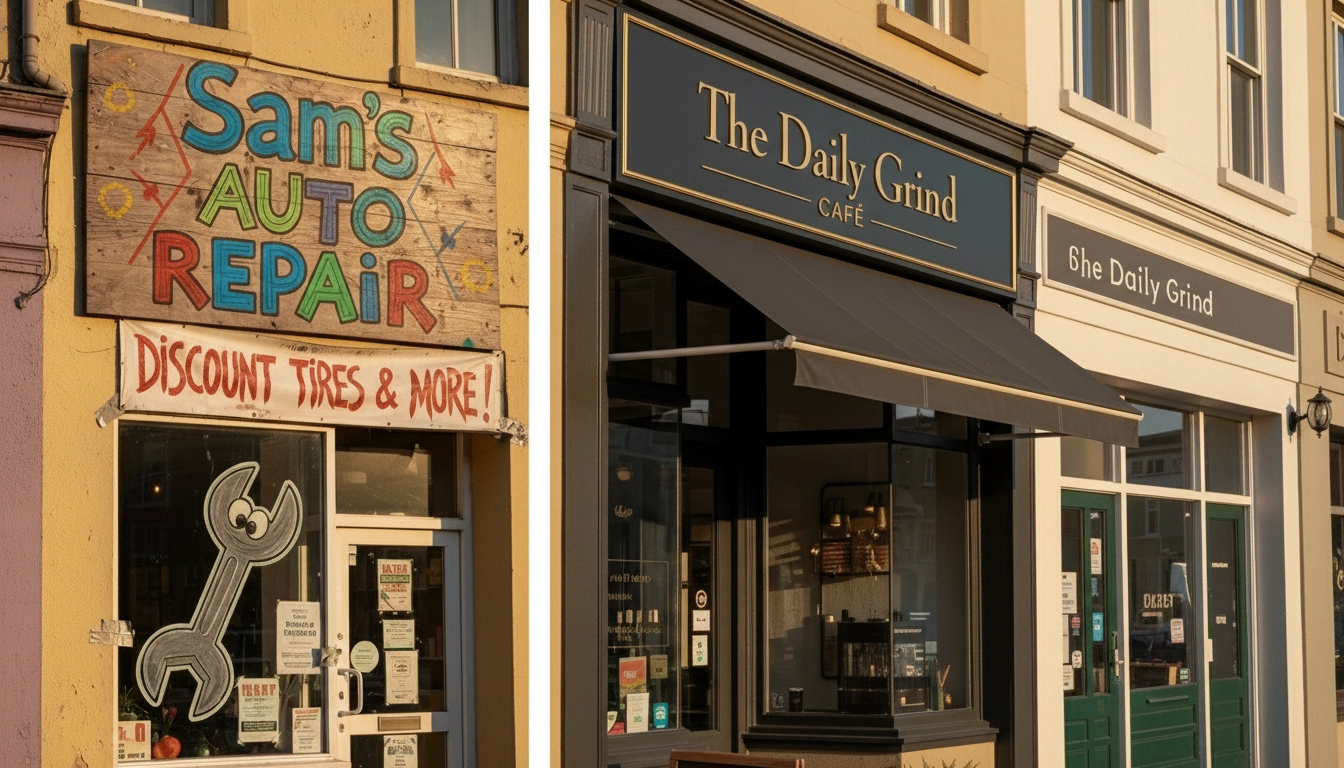
6. Your Brand Voice Changes More Than a Politician’s Platform
On Monday, you’re professional and formal. On Wednesday, you’re using emojis and slang. By Friday, you sound like you’re writing a doctoral dissertation. Your audience is getting branding whiplash trying to keep up with who you are today.
The Fix That Actually Works:
Define your brand personality in three words. Are you friendly, expert, and approachable? Bold, innovative, and direct? Warm, reliable, and experienced?
Whatever you choose, commit to it across every single touchpoint. Your emails should sound like the same person who writes your social media posts, who is the same person answering your phone.
Write like you talk (assuming you don’t talk like a corporate press release). If you wouldn’t say “we’re excited to announce our synergistic partnership” in real life, don’t write it either.
7. You’re Stuck in DIY Purgatory
There’s nothing wrong with starting with DIY branding, we all have to start somewhere, and bootstrapping is part of the small business journey. But there comes a point where your DIY brand starts working against you instead of for you.
If you’ve been in business for more than two years and you’re still using the logo you made yourself in an afternoon, it might be time to level up. Your DIY brand might be holding you back from charging what you’re worth and attracting the clients you want.
The Fix That Actually Works:
Invest in professional branding when you’re ready to scale beyond your friends-and-family network. This doesn’t mean you need to spend your kid’s college fund, but it does mean recognizing that professional branding is an investment, not an expense.
A good brand designer doesn’t just make things pretty, they create a system that works hard for your business, builds trust with your ideal clients, and helps you stand out in a crowded market.

The Bottom Line (Because You’ve Got a Business to Run)
Your brand isn’t just about looking pretty, it’s about building trust, attracting the right customers, and making it easier for people to choose you over your competition.
The good news? These problems are totally fixable. You don’t need to overhaul everything overnight (please don’t: that way lies madness and credit card debt). Pick one area that’s bugging you the most and start there.
Remember, consistency beats perfection every single time. A simple brand that’s consistent across all touchpoints will always outperform a “perfect” brand that’s scattered and confusing.
Your brand should work as hard as you do. If it’s not pulling its weight, it’s time to make some changes. Your future self (and your bank account) will thank you.
Now stop overthinking it and go fix one thing today. Your customers are waiting to see the real you shine through all that brand confusion.